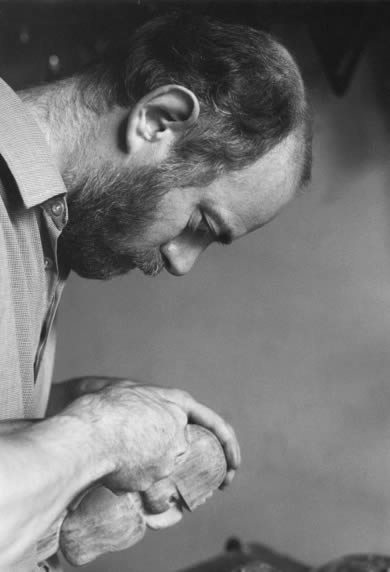


Christopher Leith (1942–2015) was a major figure in British puppetry whose career began at the age of seven, when a set of Pelham Puppets sparked a lifelong fascination with the form. He trained in theatre design at Wimbledon School of Art, acting at Darlington College of Arts, and later at the Little Angel Theatre under its founder, John Wright, where he mastered puppet design, carving and marionette manipulation. After Wright’s death, Leith became director of the Little Angel, shaping its artistic direction, expanding its audiences and community work, and training a new generation of puppeteers. During his tenure he toured widely, created twenty new plays, directed fourteen, and achieved national recognition when his acclaimed Beowulf adaptation led Sir Peter Hall to invite him to the National Theatre as its first resident puppeteer. He also created two puppet operas and frequently carved the figures and composed the music for his own productions.
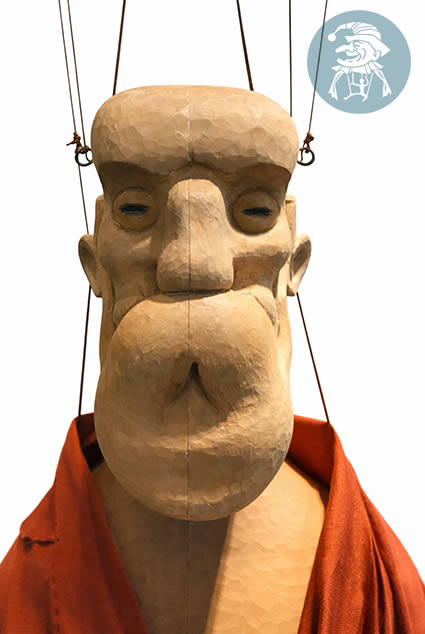
After leaving the Little Angel in 2000, Leith settled in Hastings and developed the “Little Stage,” a new theatrical form using 18‑inch marionettes for which he carved the puppets, wrote the scripts and composed the scores. He produced a cycle of miracle plays, undertook numerous commissions, and continued performing across stage, film and television while teaching widely in the UK and abroad. Diagnosed with Motor Neurone Disease in 2013, he remained committed to completing one final work, 3 Stages for Lazarus. A multifaceted artist of remarkable imagination, he believed deeply in the unique expressive power of puppetry: “Puppets exist in a state which is both alive and dead at the same moment… The puppet is only alive in the audience’s imagination.”