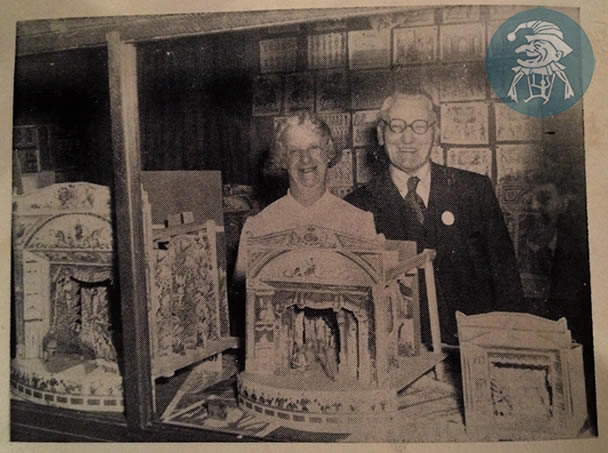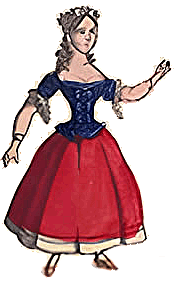
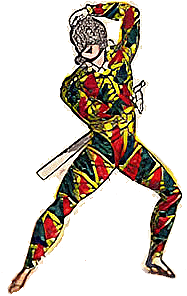

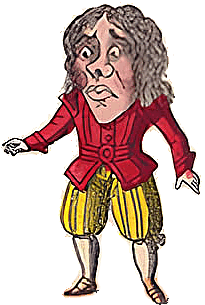
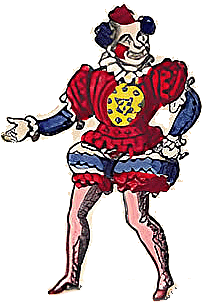

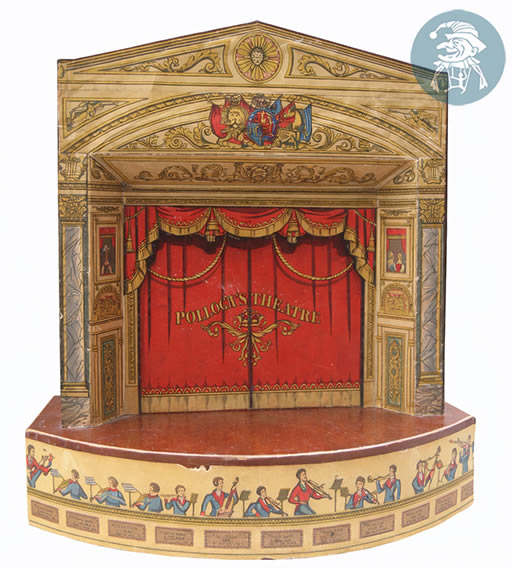
Pollock’s Toy Theatre emerged in the early nineteenth century as part of London’s thriving tradition of printed toy theatres, which allowed families to recreate popular stage melodramas at home. The business was shaped most significantly by Benjamin Pollock, who took over his father‑in‑law’s Hoxton print shop in the 1870’s and continued producing hand‑coloured sheets of characters, scenery, and playtexts long after most competitors had disappeared. His shop became a cherished relic of Victorian popular culture, attracting artists, writers, and theatre‑lovers who regarded Pollock’s work as a charming survival of an earlier theatrical age.
Following Pollock’s death in 1937, the legacy of the toy theatre was preserved through the dedication of collectors and enthusiasts, most notably Marguerite Fawdry. She rescued the remaining stock and, in the 1950s, founded Pollock’s Toy Museum. The museum and its associated shop helped spark a renewed interest in toy theatre, ensuring that Pollock’s name became synonymous with the craft and its enduring appeal.